Green City
Sustainable living designed for communities.
Green City is a mobile platform concept that approaches sustainable living through community, b ringing together education, local resources, a marketplace, impact tracking, and community forums. Designed around one question: what happens when an entire neighbourhood goes green together? Built to be adopted by any council, but every design decision here was grounded in one city: Brighton & Hove. This is the research, iterations, and testing behind it.


The Reality
You recycle. You've switched to reusable bags. You hear about sustainability everywhere; news, work, social media. But somewhere between caring and actually knowing what to do, there's a gap most people sit in alone.

The conversation around sustainability has never been louder. Governments are setting targets. Businesses are making pledges. People are paying attention.
But most responses fall into two categories: institutional action from the top down, or responsibility placed on the individual.
The gap isn't action. It's connection.
There's a layer between policy and personal action that rarely receives attention: community. People acting locally, sharing knowledge, and making progress visible. That's the gap.
The Approach
What would sustainable living look like if it was designed for communities?
Starting with Brighton & Hove: a city actively pursuing carbon neutrality by 2030. I set out to explore a solution that would help the council and its residents work toward that goal together.
Learn together
Connect
Track Progress
Understanding the problem
Starting Questions
Understanding the gap between awareness and action
Public interest in sustainability has grown significantly, yet everyday participation remains inconsistent. Research aimed to understand why this gap exists and how it might be bridged.
How are people currently practising sustainable living?
What prevents awareness from translating into consistent action?
How does community influence environmental behaviour?
How do residents engage with local sustainability Initiatives?
What do existing sustainability platforms do well, and where are the gaps?
Research Approach
To answer those questions, research was organised around three perspectives; each designed to reveal a different part of the picture.


Individual Behaviour
Examining how people approach sustainable living in everyday life; including motivations, habits, and barriers that affect sustained engagement.
Methods
Resident Survey | User Interviews | Behaviour Change Literature | Habit Formation Research
Community Influence
Exploring how local communities shape environmental behaviour and whether shared participation can support more consistent action.
Methods
User Interviews | Expert Interview | Community Sustainability Research | Gamification Research
Sustainability Ecosystem
Analysing existing sustainability platforms, policies, local initiatives, and technologies to identify fragmentation and opportunities for improvement.
Methods
Competitive Analysis (10+ platforms) | Policy & Regulation Review | Persuasive Technology Research | Tourist Survey
Research Findings
Across interviews and competitive analysis, the same problems kept appearing: fragmented tools, disappearing support, These pointed to four clear requirements not just problems to solve, but principles to design around.
Awareness alone does not sustain sustainable behaviours
People want to act sustainably — but without reinforcement, clear next steps, and ongoing support, motivation decays. The barrier isn't knowledge. It's the gap between knowing and consistently doing.
100%
Residents said sustainability matters to them
3.4/5
Tourist rating for accessible sustainable choices
Sources
Resident Survey
User interviews
Expert interview
Literature Reviews
Opportunity
If motivation already exists, the opportunity isn't to convince people — it's to reduce the friction between intention and consistent action.
Sustainability resources exist but are fragmented and hard to discover
Brighton has initiatives, businesses, and policies — but no single place to find them. 10+ platforms each solve one slice of the problem, and users are left to stitch together their own experience.
Competitive Landscape - Feature Coverage
| Platform | Track | Local | Social |
|---|---|---|---|
| JouleBug | |||
| Giki Zero | |||
| Olio | |||
| Litterati | |||
| Vinted | |||
| Too Good To Go | |||
| Love Clean Streets |
Sources
Resident Survey
User interviews
Expert interview
Literature Reviews
Opportunity
The problem isn't a lack of sustainability options — it's that no single experience connects them. The opportunity is in the connective layer, not in creating more tools.
Sustainable behaviour is more likely to persist when it's shared and socially reinforced
Across every research method, the same signal appeared: people practising sustainability felt isolated. Literature confirmed that community-based participation leads to more significant lifestyle changes — and gamification works, but fades without social context.
Sources
Resident Survey
User interviews
Expert interview
Literature Reviews
Opportunity
Sustainable behaviour doesn't need to be motivated individually if it can be reinforced collectively. The opportunity is to make participation shared and visible — not solitary and silent.
When people can't see the impact of their actions, engagement fades
Participants described feeling their individual efforts were insignificant. Literature confirmed that the inability to see measurable outcomes is a documented barrier. Existing platforms offer personal tracking but none connect individual actions to a collective city-level view.
68%
of survey participants couldn't identify a way to measure their environmental impact
3 in 4
interview participants described their efforts as feeling invisible or unacknowledged
Sources
Resident Survey
User interviews
Expert interview
Literature Reviews
Opportunity
If effort feels invisible, people stop. The opportunity is to close the feedback loop — showing people not just what they've done, but what it means alongside everyone else.
Existing Behavioural Landscape
People don't need more reasons to care about sustainability. They need fewer reasons to stop. The gap between intention and lasting behaviour is shaped by access, connection, and visibility, and right now, nothing bridges all three.


From insights to decisions
Design Principles
Community first, not individual action
Sustainable behaviour is more likely to persist when it is visible and shared. The platform should reinforce the feeling that users are participating in a collective local effort rather than acting alone.
Lower the floor, not raise the ceiling
Many people want to live more sustainably but struggle to know where to begin. Entry points should prioritise accessibility and simplicity so that users with little prior engagement can easily take their first step.
Surface what already exists
Brighton already has a strong sustainability ecosystem, but resources and initiatives are scattered across organisations. The platform should connect and surface these opportunities rather than attempting to replace them.
Make progress visible and meaningful
Sustainable behaviour weakens when individuals cannot see the impact of their actions. The platform should provide feedback that connects personal actions to measurable individual and collective progress.
Feature Prioritisation
Features were assessed against three criteria: behavioural impact, technical feasibility, and alignment with research insights.
Core features
Primary product experiences that address the research insights directly
Local sustainability discovery
Community groups and discussions
Structured sustainability learning
Local marketplace
Supporting features
Low complexity additions that enhance the core experience
Green Map filter
Green business directory
Sustainability events calendar
Daily tips
Community news and updates
Future considerations
High-potential ideas outside the scope of this project
AI-powered search
Barcode scanner
ML-driven personalisation
City Dashboard
Immersive environmental education (VR)
Product Architecture
Discover
City
Stay informed about local sustainability activity.
Local updates
Quick links to initiatives
Issue reporting
Community news feed
Map
Discover sustainability resources across the city.
Interactive resource map
Recycling and water stations
Sustainable businesses
Local events
Discover
Learn
Build knowledge and develop sustainable habits.
Structured learning pathways
Lessons and quizzes
Informational card stacks
S ustainability actions
Community
Forum communities
Local marketplace
Charity shop listings
Messaging
Footprint
Understand and track personal and collective impact.
Personal sustainability impact
City-wide progress indicators
Carbon footprint calculator
Action tracking
From concept to validated design
Early Exploration
Early exploration focused on defining how key product behaviours (learning, participation, and local discovery) would translate into simple, usable flows.
Rapid ideation generated multiple approaches, which were filtered against design principles and prioritised features.
Task-based scenarios grounded these decisions, ensuring each flow reflected a real user goal rather than a feature-driven structure.


With core flows defined, wireframes were developed and tested with users.
Formative usability study
Early exploration focused on defining how key product behaviours (learning, participation, and local discovery) would translate into simple, usable flows.
Navigation clarity
Community and marketplace navigation was unclear. The marketplace was hidden behind an additional interaction,
Resource discoverability
The map lacked filtering, making it difficult for users to locate specific sustainability resources without excessive scanning.
Interaction clarity
Microcopy was inconsistent across the app, creating a cognitive load to simple tasks, particularly for first-time users.
Iterations
What changed, and why
Two key iterations are highlighted below as they reflect broader improvements applied across the product.
Iteration 1
Simplifying navigation and scaling interaction patterns
Users struggled to navigate between community features. The marketplace was hidden behind an additional step, and labels lacked clarity.
Before
Before
Before
Marketplace behind extra tap
Confusing label
After
Before
Before
Central toggle, both visible
Following" — clear label
Pattern scaled to Footprint:
same toggle replaced vertical scroll for "My Footprints" / "Actions"
Iteration 2
Making a resource rich map usable
Some users pointed out that it will be better to easily view the overview of the map
Before
Before
Marketplace behind extra tap
Confusing label
Before
Before
Before
Central toggle, both visible
Following" — clear label
Additional refinements across the product
Quick issue reporting
Added a streamlined reporting flow accessible directly from the City page.
City reporting page
Redesigned to present reports in a more accessible and visual format.
Community posting
Users can now choose or switch community before submitting a post.
The Final Solution
Green City
Sustainable living, designed for communities.
Discover
City
Stay informed about local sustainability activity.
Local updates
Quick links to initiatives
Issue reporting
Community news feed
Map
Discover sustainability resources across the city.
Interactive resource map
Recycling and water stations
Sustainable businesses
Local events
Discover
Learn
Build knowledge and develop sustainable habits.
Structured learning pathways
Lessons and quizzes
Informational card stacks
S ustainability actions
Community
Forum communities
Local marketplace
Charity shop listings
Messaging
Footprint
Understand and track personal and collective impact.
Personal sustainability impact
City-wide progress indicators
Carbon footprint calculator
Action tracking
Local resource discovery. Structured learning. Community forums. A circular marketplace. Personal and city-wide impact tracking. Gamification that rewards real action. One platform, built for Brighton & Hove.
Discover
What's happening in your city.



Easy access to
news, council updates, and community activity and more
City Map
Every sustainability resource mapped, filtered, within reach.
Find what you need. Right where you are.

Before


Filtered to what matters right now.
Tap any pin for details, ratings, and directions


Water stations
Issue Reports
Find your nearest refill point in seconds. Filter the map to water stations, see what's nearby, and get walking directions
no more single-use bottles.
Engage
Learn Experience
learning system that adapts to your pace, your format, and your starting point.


Guided path to learning
Pick a topic, or let the platform build a path for you.
Browse freely or follow a guided path. Either way, every lesson leads to action."
Lesson formats
The Journey


Learn Experience
Join the conversation. Exchange what you don't need. Keep goods and ideas circulating.
Guided path to learning
Find your community. Join the conversation.
Browse freely or follow a guided path. Either way, every lesson leads to action."
Lesson formats
The Journey
Water stations
Issue Reports
Water Stations
The most urgent information sits at the top—today's classes, upcoming deadlines. Scroll for courses, resources, and contacts. Students get what they need without digging.
School
Everything academic lives here: courses, calendar, resources, contacts, and more.
Exploring the school scetion
The most urgent information sits at the top—today's classes, upcoming deadlines. Scroll for courses, resources, and contacts. Students get what they need without digging.

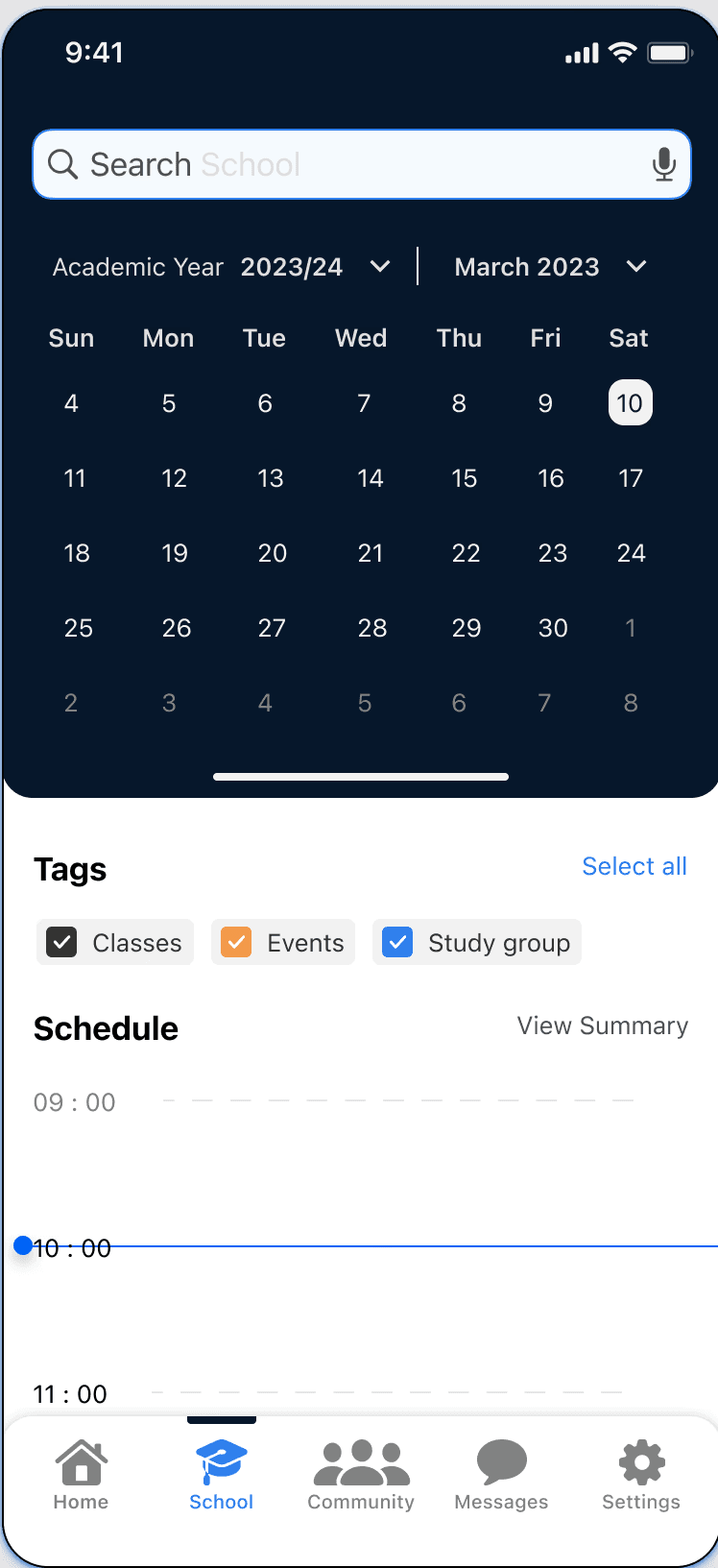
Never Miss a Deadline
Your school management system pulls from courses, events, and deadlines. with ability to manually add events and connect to other carlenders
Deep Dive: Course Module
Each course contains everything students need: overview, discussions, weekly content, timetable, study groups. No jumping between platforms.
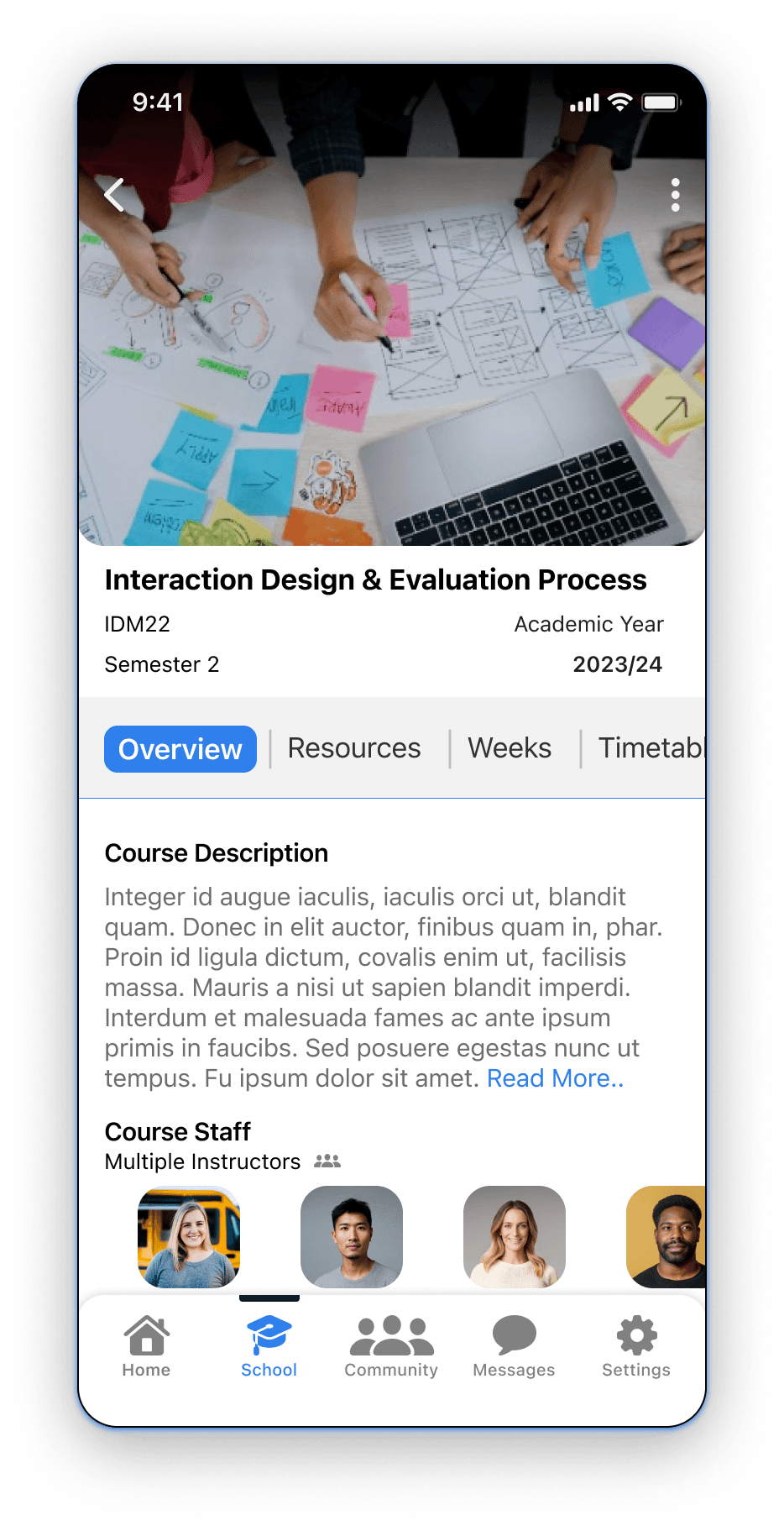

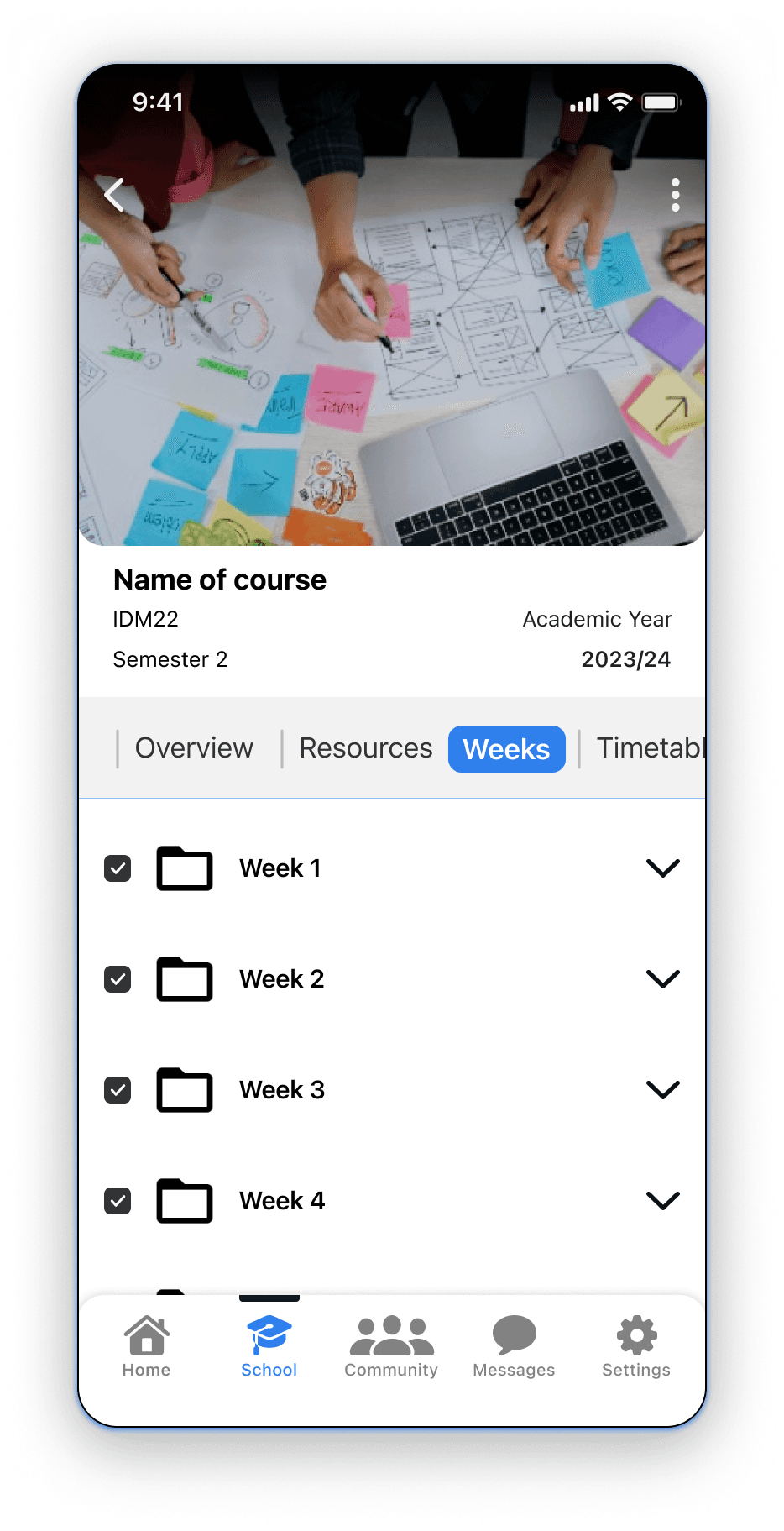


Everything Academics lives here, just one tap away
Community
A better way to connect with campus life.


Posts. Events. Groups.
Explore conversations through Posts. See what's coming up with Events. Join communities that share your interests with Groups.
Tap In. Take Action.
React and reply to posts. View event details and RSVP. Request to join groups you're interested in.


Your Personalised View
Posts, events, and groups, all in one view. Discover shows what matters based on your course, interests, and campus activity.
Where students meet, discover, and belong.
Messages
All your conversations, finally in one place.


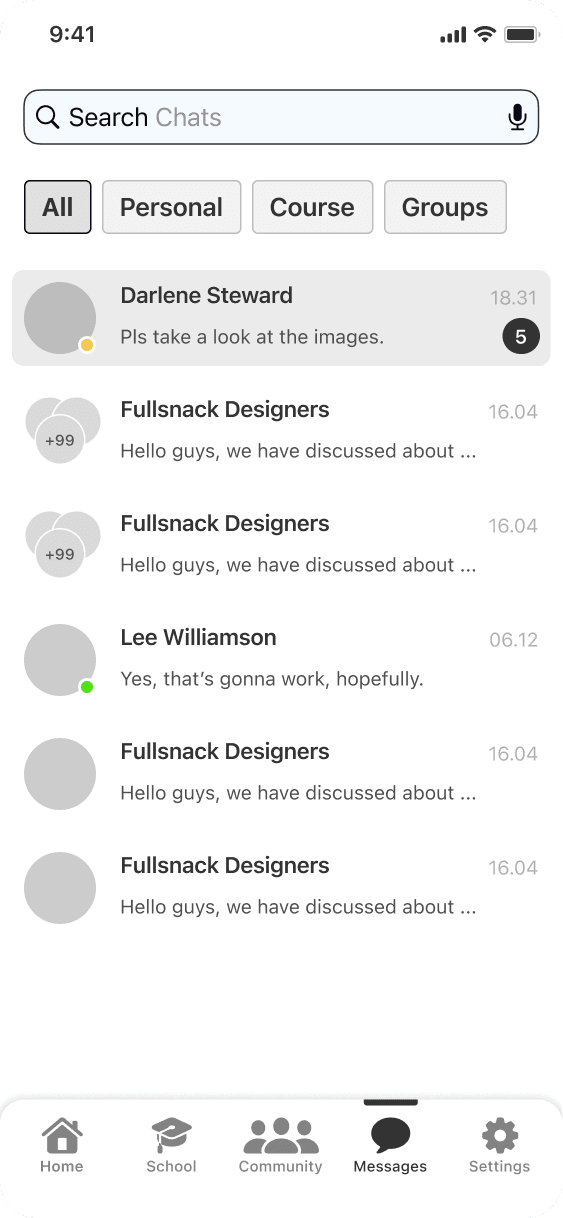
All. Personal. School. Groups.
Every message sorted by context. Personal chats with friends. School messages from lecturers and staff. Group conversations for courses and study groups. Or see everything at once.

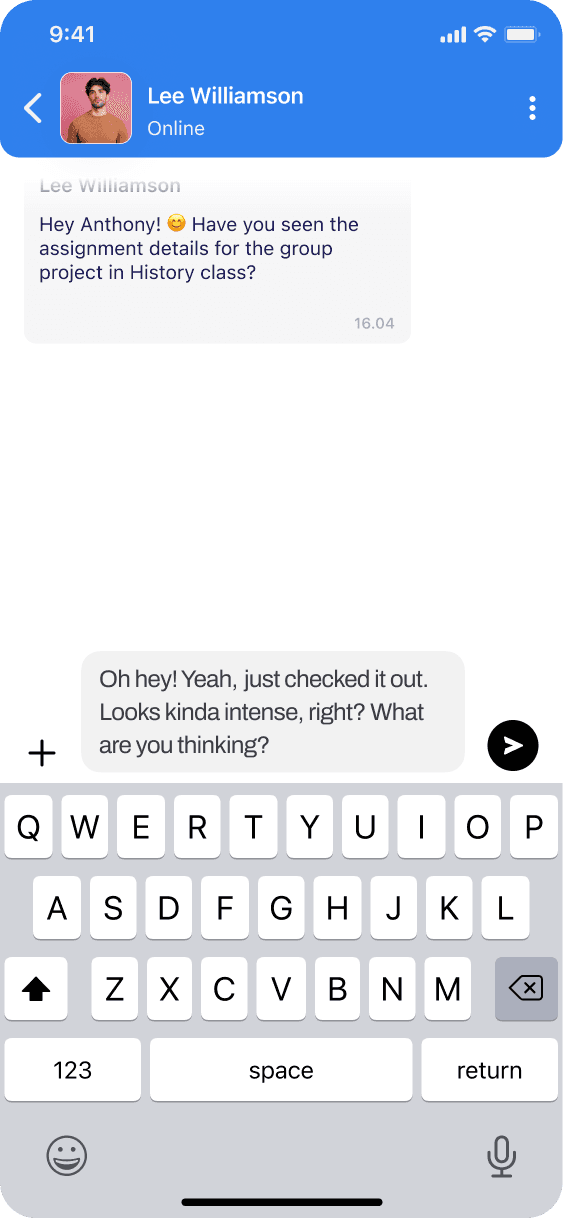


Text like you are used to
Type, reply, react, just like the apps students already know. Whether it's a personal chat or a busy group thread, messaging feels natural.
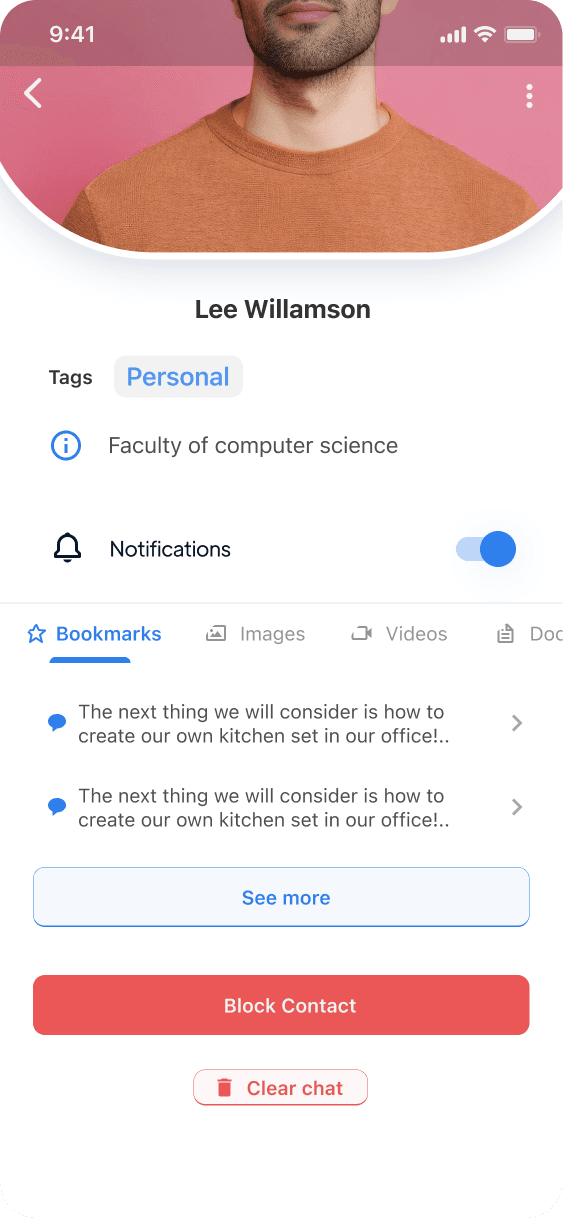
Profiles at a Glance
Tap a profile to see who you're chatting with, their course, shared groups, and how to reach them. For group chats, see all members and what the group is about.



Where students meet, discover, and belong.
Extras
Getting in, getting started, and making it yours.
Welcome
Open the app. Choose your university. Sign in. Students are inside in seconds.
The Welcome Tour
Type, reply, react, just like the apps students already know. Whether it's a personal chat or a busy group thread, messaging feels natural.
Profile & Settings
Personalise the profile. Control the app through settings. Access legal and privacy policies when needed.
This is Skoolbuddy.
University life, simplified.
Learning What Worked
Designs can feel right and still fail with real users. I tested with 5 students to find out if the structure, navigation, and flows actually worked, or if I'd missed something fundamental.
Results at a Glance
SUS Score
Task Completion
Avg Task Time
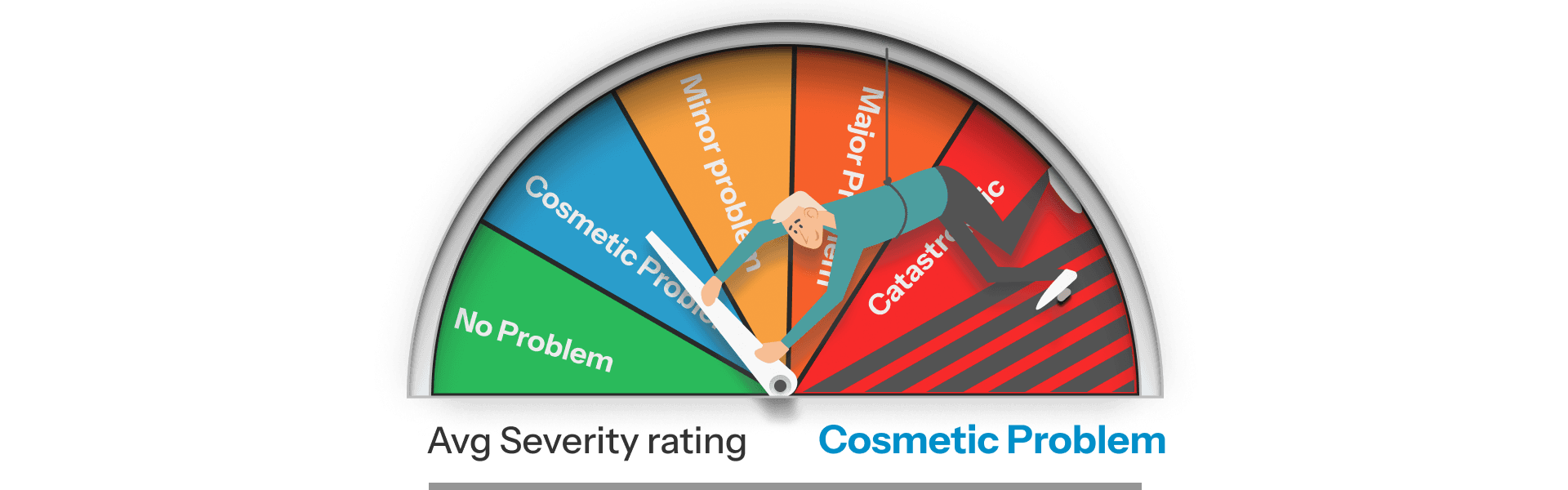
Severity Rating
Task & Severity
All participants completed core tasks within target time. Issues identified were cosmetic, minor refinements, not structural problems.
SUS - System Usability Scale
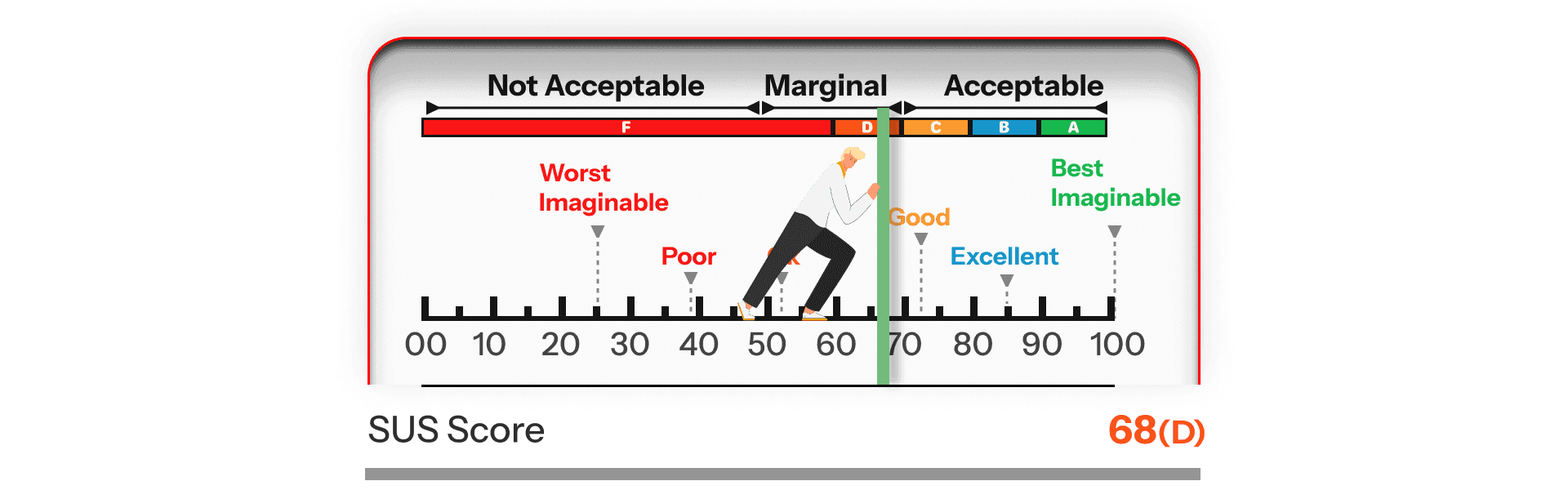
68.5 tells two stories. The structure worked, users completed tasks, understood navigation, and didn't get lost. The score reflects what wireframes can't show: visual hierarchy, colour cues, and polished interactions. The foundation is solid; the surface needs refinement.
Interviews - Some suggestions from users
Testing a wireframe means feedback focuses on what's missing, not what's working. Users suggested features and visual improvements, confirming the structure was clear enough for them to imagine what more it could do.
“It’d be awesome to have a little marketplace where students could swap books or used items.”
💡
Looking Back
Honestly, I expected the structure to be the hardest part. It wasn't—because I didn't design it alone. Card sorting showed me how students already think, and I built around that.
Structure came from users, not assumptions
Social features serve campus life, not endless scrolling
School and Community stay connected but never tangled
This project has blind spots. Five students isn't enough. One university isn't representative. iOS-only isn't the full experience. I worked within constraints, but constraints leave gaps.
Broader testing pool—different universities, accessibility needs
Android and web versions to see the full picture
Features like marketplace and video calling stayed on the backlog
A Personal Note
Who Should Adapt?